
PH-FITNESS Is for Everyone, Not Just Athletes
You don’t need to be a professional athlete to belong in the gym. Fitness isn’t about chasing records or competing with others it’s about becoming the best version of yourself.
Whether you’re here to boost energy, improve health, reduce stress, or simply feel stronger in daily life, the gym is your space. Every person every age, shape, and ability has a place here.
Why Training and Stretching Your Fascia Is Key to Better Performance
Fascia is the connective tissue network that surrounds and links muscles, bones, and joints throughout your body. Far from being passive “packing material,” it plays an active role in movement mechanics, flexibility, and athletic output.
When we think about training, we usually focus on muscles building strength, endurance, and definition. But there’s a crucial system that often gets overlooked: the fascia. This thin, web-like connective tissue surrounds and connects every muscle, bone, and organ in your body. If your fascia is tight or restricted, it can limit your movement, cause stiffness, and even reduce your strength potential.
What Is Fascia and Why It Matters Fascia acts like an internal support network. It keeps everything in place while allowing smooth, efficient movement. Over time, poor posture, repetitive movement, or lack of mobility training can cause fascia to become dense and sticky. As a result, this reduces flexibility and creates tension. Think of it as a wrinkled, dry sponge. It needs hydration and movement to stay supple.
Fascial fitness isn’t about lifting heavier weights; it’s about improving the elastic recoil and glide of your tissues. Dynamic, multi-directional movements such as battle ropes, medicine ball throws, or animal flow exercises challenge your fascia. They help restore its natural elasticity.
Adding foam rolling, vibration tools, and mobility drills into your routine can also break down adhesions. Furthermore, these tools help keep your connective tissue healthy.
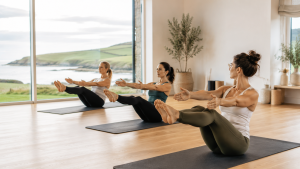
Streteching Fasica for Recovery after training, long, slow stretches especially those held for 2–3 minutes can help release fascial tension. Try yin-style stretches, deep breathing, and gentle mobility work to rehydrate and lengthen the fascia. You’ll notice improved range of motion, quicker recovery, and a lighter, more fluid feeling in your body.
‘The Bottom Line’
Your fascia is more than just “stuff around the muscles” — it’s a living, responsive tissue that shapes how your body moves and feels. By giving it attention through functional training and mindful stretching, you’ll not only boost your performance. You’ll also prevent injuries and move with greater freedom every day.

PH-FITNESS Boosting Men’s Mental Health: In our gym, we believe training isn’t just about muscles it’s about mindset. Exercise is one of the most powerful tools for managing stress, anxiety, and mental health.
When you move your body, you release endorphins your brain’s natural “feel-good” chemicals helping clear your head and lift your mood. As a result, every session becomes more than a workout; it’s a reset for both body and mind.
The gym is also a space for connection and confidence. Setting goals, achieving them, and being part of a supportive community reminds men that they’re never alone. Whether you’re lifting, running, or stretching, every rep builds strength inside and out.
So next time stress hits, step into the gym.
Train hard, breathe deep, and leave stronger mentally and physically at PH-FITNESS.