

There are endless training plans, fitness trends and new methods being promoted, but the basic principles behind effective training have not changed very much. The best results still come from understanding the individual, having a clear goal and applying enough challenge to create progress without pushing the body beyond what it can recover from.
The Principles Behind Effective Training
One of the most important principles is that no two people are the same. Age, strength, mobility, previous training, body structure, lifestyle and recovery all influence how somebody responds to exercise. A programme that works well for one person may not suit another, which is why training should always be adjusted to the individual rather than copied blindly from somebody else. The body also needs a reason to adapt. When we expose it to a new level of physical stress, it responds by becoming stronger, fitter or more efficient. This is often why people see rapid improvements when they first begin training. As the body becomes used to the workload, however, progress slows and the programme has to develop with it.
Progress does not always mean constantly adding more weight. Improvement can also come through better technique, more repetitions, improved control, greater range of movement, more work completed in the same time or better recovery between sessions. The important point is that training should gradually move forward rather than remain exactly the same week after week. The type of training also needs to reflect the result you are trying to achieve. Someone who wants to improve strength needs to train for strength, while someone focused on endurance or mobility needs a different approach. Supporting exercises can be useful, but they should always have a purpose and support the main goal rather than simply adding more work for the sake of it.
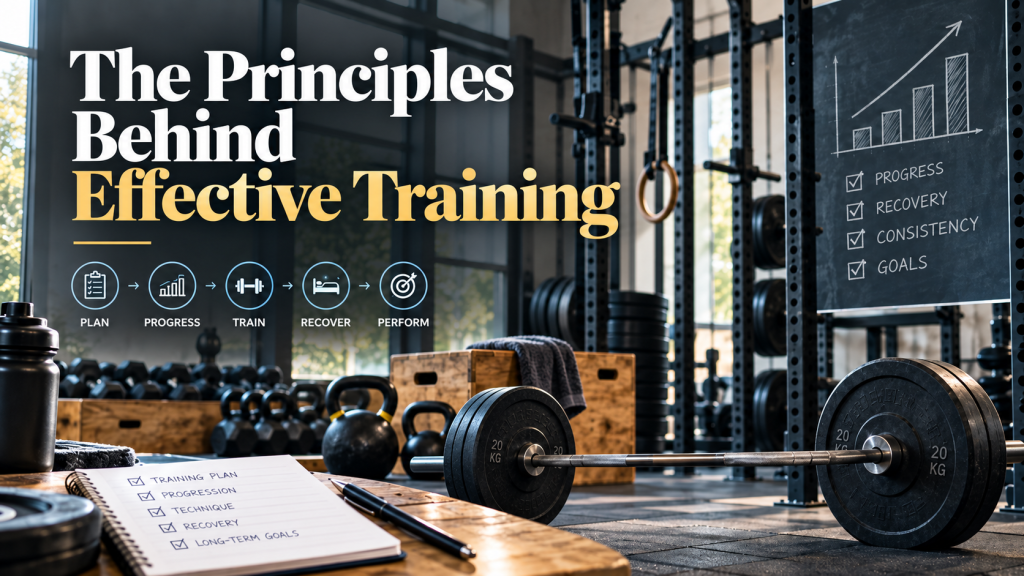
Consistency remains one of the biggest factors in long-term progress. One extremely hard session will not make up for weeks of inconsistent training. Regular, well-planned work usually produces better results than training at maximum effort and then needing long periods to recover. Equally, taking a break does not mean everything has been lost, as strength and fitness often return more quickly once they have been developed before. Specific practice also matters. If somebody wants to improve a particular movement, they need to practise that movement regularly. Additional exercises may strengthen weak areas or improve control, but they should not completely replace the main activity. Training should remain connected to the outcome that the person actually wants.
Recovery is just as important as the training itself.
Exercise creates the stimulus, but the body needs adequate sleep, nutrition and rest to adapt properly. Constant fatigue, poor performance, lack of motivation or persistent soreness can all indicate that the balance between training and recovery is wrong. More is not always better, particularly when the body is no longer responding positively. The main lesson is that effective training does not need to be overcomplicated. It needs to be specific, progressive and realistic. The programme should suit the person, reflect the goal and change as that person improves. Good training is not about following every new trend. It is about applying the basics consistently and understanding why each part of the programme is there.
“The best training programme is not the hardest one, it is the one that has purpose, progresses with you and can be sustained over time.”
Phil Hennessy